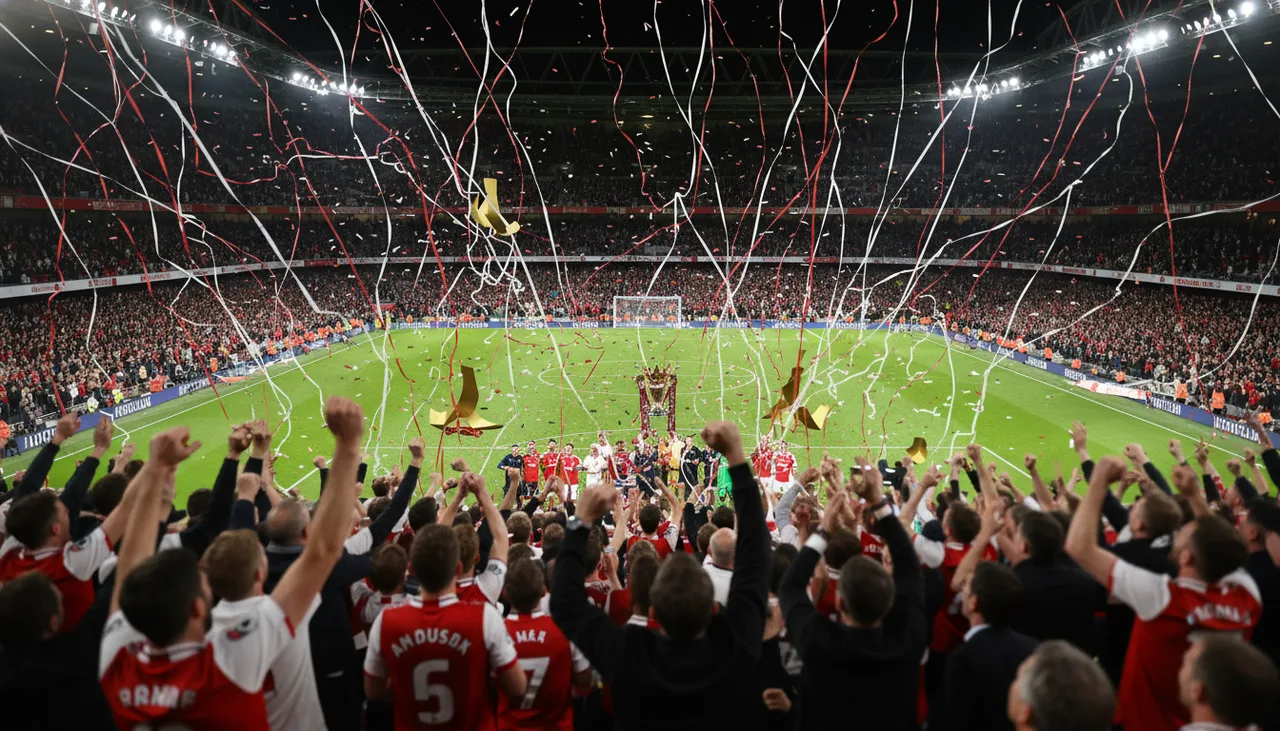
The wait is over. Arsenal are Premier League champions for the first time in 22 years, and the noises out of north London are those of a fanbase finally exhaling after seasons of agonising near-misses. Manchester City's 1-1 draw with Bournemouth confirmed the title, and the celebrations that followed were entirely deserved — not just for the players, but for a club that showed a patience rarely seen in the modern game.
A project built on belief
When Mikel Arteta was appointed Arsenal head coach in December 2019, there were questions about whether a man with no senior managerial experience could handle one of English football's most scrutinised jobs. Those questions grew louder during a difficult early period, and they did not entirely go away even as Arsenal finished runners-up in 2022-23 and 2023-24 — title races lost rather than won, but title races nonetheless. The board held firm. The manager held firm. Now the trophy is in the cabinet.
Speaking on Match of the Day, Danny Murphy and Joe Hart both praised the club's decision to stand by Arteta through the difficult moments. The sentiment was clear: this title is, in large part, the reward for institutional patience. Other clubs might have swung the axe after back-to-back second-place finishes. Arsenal did not, and they are champions.
The runners-up tag finally buried
Two consecutive Premier League seasons as runners-up had become something of a scar for this group. Each time Arsenal led the race at various points, only to ultimately fall short. The market and the pundits wondered whether Arteta's side had the resilience to close a title out. This season has answered that question comprehensively.
The manner in which City's dropped points at Bournemouth triggered the celebrations underlines just how tight the margins remain at the top of English football. A 1-1 draw was enough to hand Arsenal the crown, a reminder that this league is relentlessly unforgiving — and that Arsenal navigated it better than anyone else this term.
What this means for the club
The significance of ending a 22-year wait stretches well beyond the three points accumulated over the course of a season. Arsenal's last title, in 2003-04, came during the Invincibles campaign under Arsène Wenger — a side that remains one of the most celebrated in English football history. Arteta's team have carved their own chapter now, and the story of a young, committed group growing together under a meticulous manager will be told for years to come.
For Arteta himself, this is the ultimate vindication. Shaped by his time under Pep Guardiola at City, he arrived at the Emirates with a clear footballing philosophy and the courage to implement it even when results were uncertain. The process, so often cited in his press conferences, has delivered the ultimate outcome.
Arsenal are Premier League champions. It has been a long time coming, and on the evidence of how this squad is built — with quality, depth and a manager still in his early forties — it need not be another 22 years before they lift the trophy again.
FAQs
Frequently asked
- When did Arsenal last win the Premier League?
- Arsenal's previous Premier League title came in the 2003-04 season, the famous Invincibles campaign under Arsène Wenger in which they went the entire league season unbeaten.
- How did Arsenal win the Premier League title?
- Arsenal were confirmed as Premier League champions after Manchester City could only draw 1-1 with Bournemouth, leaving Arsenal with an insurmountable points advantage at the top of the table.
- How long has Mikel Arteta been Arsenal manager?
- Mikel Arteta was appointed Arsenal head coach in December 2019, meaning he has been in charge for over five years before guiding the club to this Premier League title.