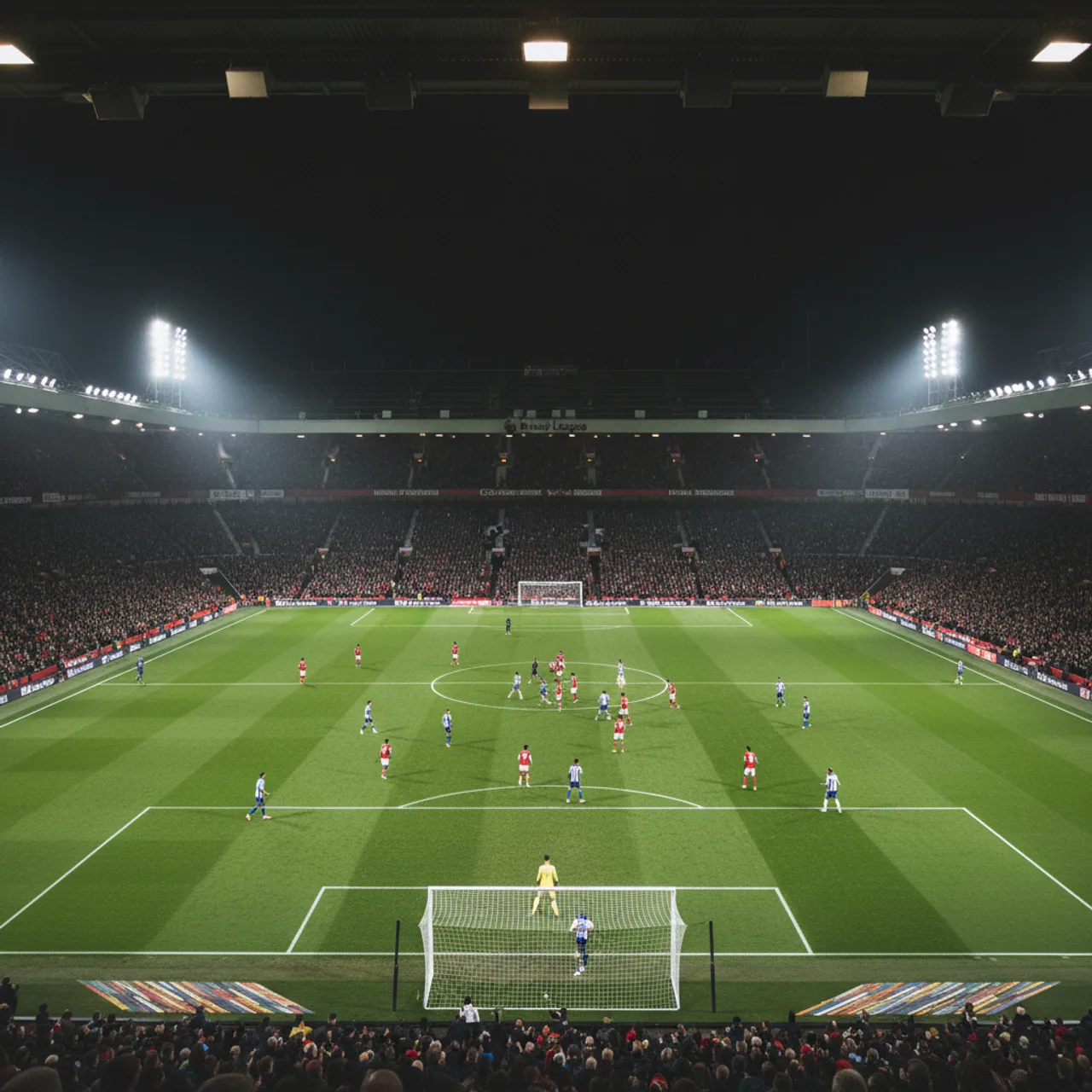
The controversy surrounding Manchester United's 3-2 Premier League victory over Nottingham Forest is refusing to go away, with BBC Sport pundits Mark Schwarzer and Dion Dublin both insisting that Matheus Cunha's decisive goal should have been chalked off.
The arm incident that changed everything
At the heart of the debate is Bryan Mbeumo's use of his arm to bring Diego Dalot's cross under control in the moments directly preceding Cunha's finish. Schwarzer and Dublin, analysing the incident on Match of the Day, were unequivocal in their verdict — describing the action as giving United a "completely unfair advantage" over their opponents.
Under the laws of the game, a goal must be disallowed if an attacking player handles the ball in the build-up, provided the handling is deliberate or, in certain circumstances, accidental but still deemed to have benefited the attacking side. The pundits' view is that Mbeumo's arm trap falls squarely into that category.
Why VAR did not intervene
What will frustrate Forest supporters and neutral observers alike is that the goal stood despite the availability of VAR. The technology exists precisely to catch these moments, yet on this occasion the on-field decision was not overturned. Schwarzer and Dublin suggest that represents a significant officiating error, one that ultimately cost Forest points in a result with real implications at both ends of the Premier League table.
The noises out of Old Trafford will inevitably be that Cunha's finish was emphatic and deserved, and on another day the controversy might be a footnote. But given the fine margins involved in the final weeks of the season, a two-goal swing — the difference between a 3-2 win and a potential draw — carries enormous weight.
Broader questions about consistency
This is not the first time handball in the build-up to a goal has divided opinion this season, and it will not be the last. The rules around handball remain among the most debated in the modern game, with supporters, managers and pundits regularly at odds over what constitutes an advantage gained. What makes this incident particularly pointed, according to the Match of the Day analysis, is the deliberate nature of Mbeumo's arm movement — using it actively to trap and control the ball rather than simply having the ball brush against a naturally positioned limb.
Forest, who pushed United all the way and scored twice themselves, will feel aggrieved. The manner in which the goal was allowed to stand opens up wider questions about the consistency of VAR application and whether the protocol for reviewing handball incidents in the build-up is being applied rigorously enough across the board.
What happens next
The Professional Game Match Officials Board is unlikely to make any public statement altering the outcome — results in football are not reversed after the fact on the basis of pundit analysis. But the debate will linger, feeding into broader calls for clearer, more consistently applied handball guidelines as the season heads into its closing stages.
For United, the three points stand. For Forest, the feeling that at least one of those points was taken in circumstances that did not sit right with the laws of the game will be difficult to shake.
Frequently asked
- Why did Cunha's goal cause controversy against Nottingham Forest?
- Bryan Mbeumo used his arm to control Diego Dalot's cross in the build-up to Matheus Cunha's goal. BBC pundits Mark Schwarzer and Dion Dublin argued this constituted handball and that the goal should have been disallowed under the laws of the game.
- Why didn't VAR disallow Cunha's goal?
- VAR reviewed the goal but did not overturn the on-field decision to allow it. Pundits have criticised that call, suggesting the handball by Mbeumo gave Manchester United an unfair advantage that VAR should have caught.
- What is the handball rule in the build-up to a goal in the Premier League?
- Under Premier League and FIFA rules, a goal must be disallowed if an attacking player deliberately handles the ball in the immediate build-up. Whether the arm involvement is judged deliberate or advantageous is at the referee and VAR's discretion, which is why these decisions often prove contentious.