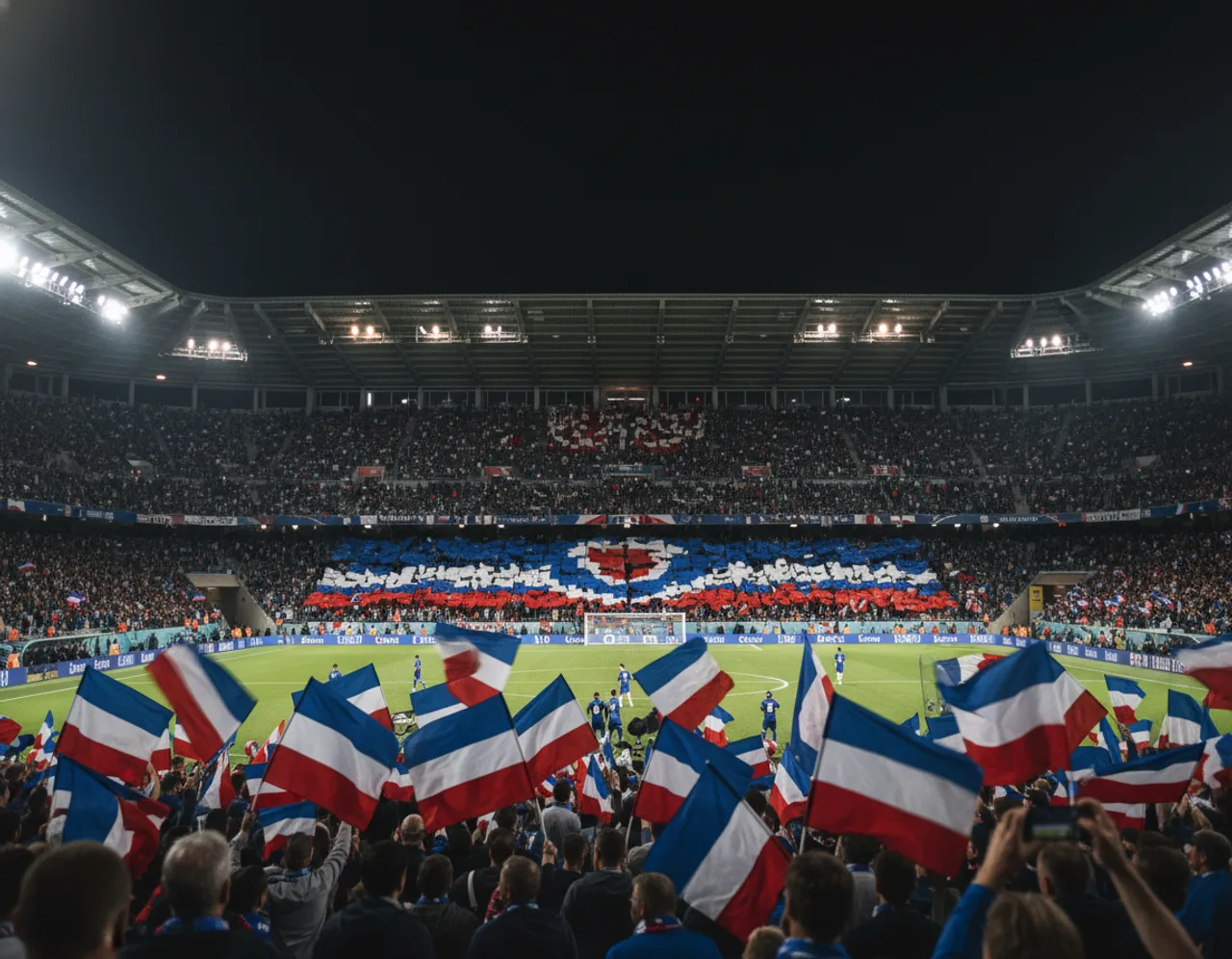
There is a particular kind of tension that follows France into every major tournament. The squad glitters, the expectations soar, and yet supporters brace themselves for the familiar sight of Didier Deschamps applying the handbrake just when his side threaten to pull clear of the field. Heading into the 2026 World Cup, that tension has never felt more charged — because the attacking talent now at his disposal is, by any honest assessment, extraordinary.
The eternal question: style or substance?
Antoine Griezmann put it best during Euro 2024, describing France's approach as "a pain to watch, but it makes you win". That tournament captured the contradictions of Deschamps's tenure in sharp relief. Les Bleus reached the semi-finals yet mustered just one goal from open play across the entire competition, with Randal Kolo Muani claiming that solitary strike. Three further goals arrived via the penalty spot or own goals. It was functional. It was infuriating. It worked — until Spain ended their run.
The signs of evolution, however tentative, emerged during France's March tour of the United States. A five-goal return across two friendlies against Brazil and Colombia offered a glimpse of what this squad could produce when given licence to express themselves. Deschamps himself acknowledged a desire for his team to be "less predictable and readable", though he was equally candid about the risk: "At times, we've been a bit on the limit."
That phrase tells you everything about the manager. Even when opening the door to adventure, he has one eye firmly on the exit.
The attacking riches at Deschamps's disposal
Kylian Mbappé captains the side and, with Olivier Giroud's retirement from international football in 2024, is on the verge of becoming France's all-time leading goalscorer. He has matured from the electrifying winger who helped fire France to the 2018 World Cup title into a genuinely dominant centre-forward, and the team's attacking structure is built firmly around him.
Flanking Mbappé are Ousmane Dembélé — the reigning Ballon d'Or holder — and Michael Olise, a player whose ability to manufacture something from nothing has made him one of the most exciting forwards in European football. Defender Lucas Hernandez has claimed France possess "the best attack in the world", and while that kind of talk is easily dismissed as dressing-room bravado, it is genuinely difficult to argue against when you examine the individuals involved.
The challenge for Deschamps is not identifying the talent — that part is straightforward — but moulding three players of such individual brilliance into a functioning, cohesive unit. Since Giroud's departure removed the focal point that France's attacking play had revolved around for years, finding the right balance has been an ongoing puzzle. The March friendlies suggested a solution may be within reach. Whether that more expansive blueprint survives contact with tournament football remains the central question of France's campaign.
A legacy on the line
Deschamps will step away from the France job after this summer, and his record demands respect: back-to-back World Cup finals, a European Championship final, 12 years of consistent delivery at the highest level. His pragmatism has been so influential that Gareth Southgate modelled significant parts of his England approach on it. To his critics — and there are many — Deschamps has a well-worn response: "Watch something else, then."
He is not about to reinvent himself in his final tournament. But there is a version of this France side that could win the World Cup playing beautiful football, and another that could win it grinding out 1-0s. Either outcome would cement an already remarkable legacy.
The player to keep an eye on
Warren Zaïre-Emery turned 20 this year and has already packed a considerable amount into a young career. He scored on his France senior debut at 17, suffered injuries and a loss of form that saw him drop to the Under-21s, and has since bounced back to become a key component of what many regard as the finest club midfield in world football. His versatility — he could even provide cover at right-back — makes him a potentially invaluable option for Deschamps as the tournament progresses.
FAQs
Frequently asked
- Who is France's captain at the 2026 World Cup?
- Kylian Mbappé captains France at the 2026 World Cup. He is also closing in on Olivier Giroud's record as France's all-time leading goalscorer.
- Who is France's manager at the 2026 World Cup?
- Didier Deschamps has managed France for over 12 years and is in charge for the 2026 tournament. He has previously guided the team to two World Cup finals and a European Championship final, and is expected to step down after this summer's competition.
- How did France qualify for the 2026 World Cup?
- France qualified comfortably through the European qualifying process, conceding fewer goals than all but four other European nations during the campaign, which underlined their defensive solidity under Deschamps.