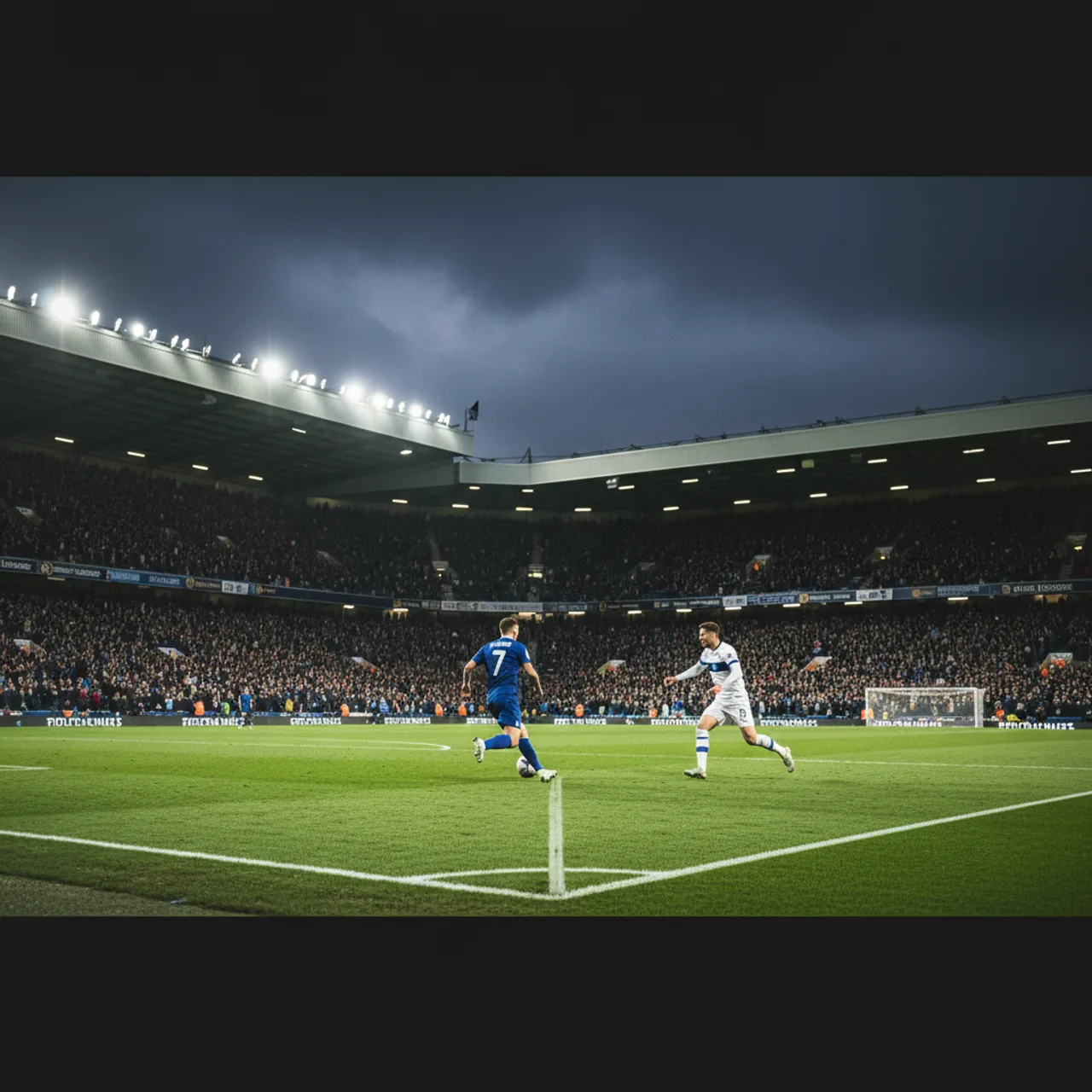
Every nation carries its folklore in goals. For Scotland, that catalogue is richer and more emotionally layered than most, stretching from Wembley shocks to World Cup heartbreak and back again through decades of qualification drama. A public vote to find Scotland's most iconic goal has now reached its semi-finals, and the remaining contest is as compelling as the tournament itself.
McTominay puts McFadden to the sword
The first last-four tie has already been settled, and the result was not particularly close. Scott McTominay's overhead kick against Denmark in November — struck with World Cup qualification hanging in the balance at Hampden — collected 77 per cent of the vote against James McFadden's extraordinary 30-yard strike at the Parc des Princes in 2007. That McFadden goal, which silenced Paris and gave Scotland a famous win over France, has long occupied a special place in the national consciousness. To see it dispatched so emphatically says something about how quickly a new generation can claim the conversation.
The remaining tie: history against modernity
The second semi-final is the one that will test supporters' sense of history most acutely. On one side sits Archie Gemmill's goal against the Netherlands at the 1978 World Cup in Argentina — perhaps the most celebrated individual moment in Scottish football, a weaving, feinting solo run that briefly turned a group-stage exit into something approaching transcendence. On the other is Kenny MacLean's audacious strike from the halfway line against Denmark, a moment born of opportunism and nerve in equal measure.
Gemmill's goal needs little introduction to anyone who has followed Scotland across any era. The context alone elevates it: a nation needing to beat the Netherlands by three goals to progress, a cause that looked almost impossible before that piece of individual brilliance made it briefly imaginable. It remains a fixture in the broader cultural memory of the country, not merely a football highlight.
MacLean's effort, by contrast, is more recent and rather different in character — less a dribble through defenders, more a thunderbolt from distance that the opposition keeper simply had no answer to. Its timing, in a match with direct bearing on World Cup qualification, ensures it carries genuine weight beyond the purely aesthetic.
A shortlist that spans the generations
The original bracket was drawn from a remarkable pool of nominees, covering nearly six decades of international football. Denis Law's opener as Scotland beat newly crowned world champions England 3-2 at Wembley in 1967 set the tone early. Joe Jordan's header that sent Scotland to the 1974 World Cup, Kenny Dalglish's contributions across three separate tournaments, David Narey's thunderous piledriver against Brazil in 1982, Ally McCoist's finish at Villa Park during Euro 96, Leigh Griffiths' back-to-back free-kicks against England in 2017 — each one is a window into a particular moment and mood.
What the vote has demonstrated, as it has progressed, is that Scottish supporters are not merely sentimentalists. McTominay's victory over McFadden suggests that contemporary heroism, when it arrives with sufficient drama and consequence, can compete with the most storied entries in the archive.
What comes next
The second semi-final vote is now open, inviting supporters to weigh Gemmill's artistry against MacLean's audacity. Whichever prevails will face McTominay's overhead kick in the final. The market — insofar as broader football opinion is concerned — would likely make Gemmill the favourite on historical grounds alone. But this competition has already shown that history is not always the deciding factor. Scottish football fans, it turns out, are rather good at living in the present when the present is good enough.
Frequently asked
- What is Scotland's most iconic goal competition?
- It is a public vote run to find the greatest goal in Scotland's international football history, featuring nominees from 1967 through to 2025 and now down to its semi-final stage.
- Which goals are left in the Scotland iconic goal semi-finals?
- Scott McTominay's overhead kick against Denmark has already won the first semi-final. The second tie is between Archie Gemmill's solo goal against the Netherlands at the 1978 World Cup and Kenny MacLean's halfway-line strike against Denmark.
- What was Archie Gemmill's goal against the Netherlands?
- Gemmill scored a stunning individual goal at the 1978 World Cup in Argentina, weaving past several Dutch defenders before finishing to put Scotland 3-1 up. It is widely regarded as one of the greatest goals in World Cup history.